

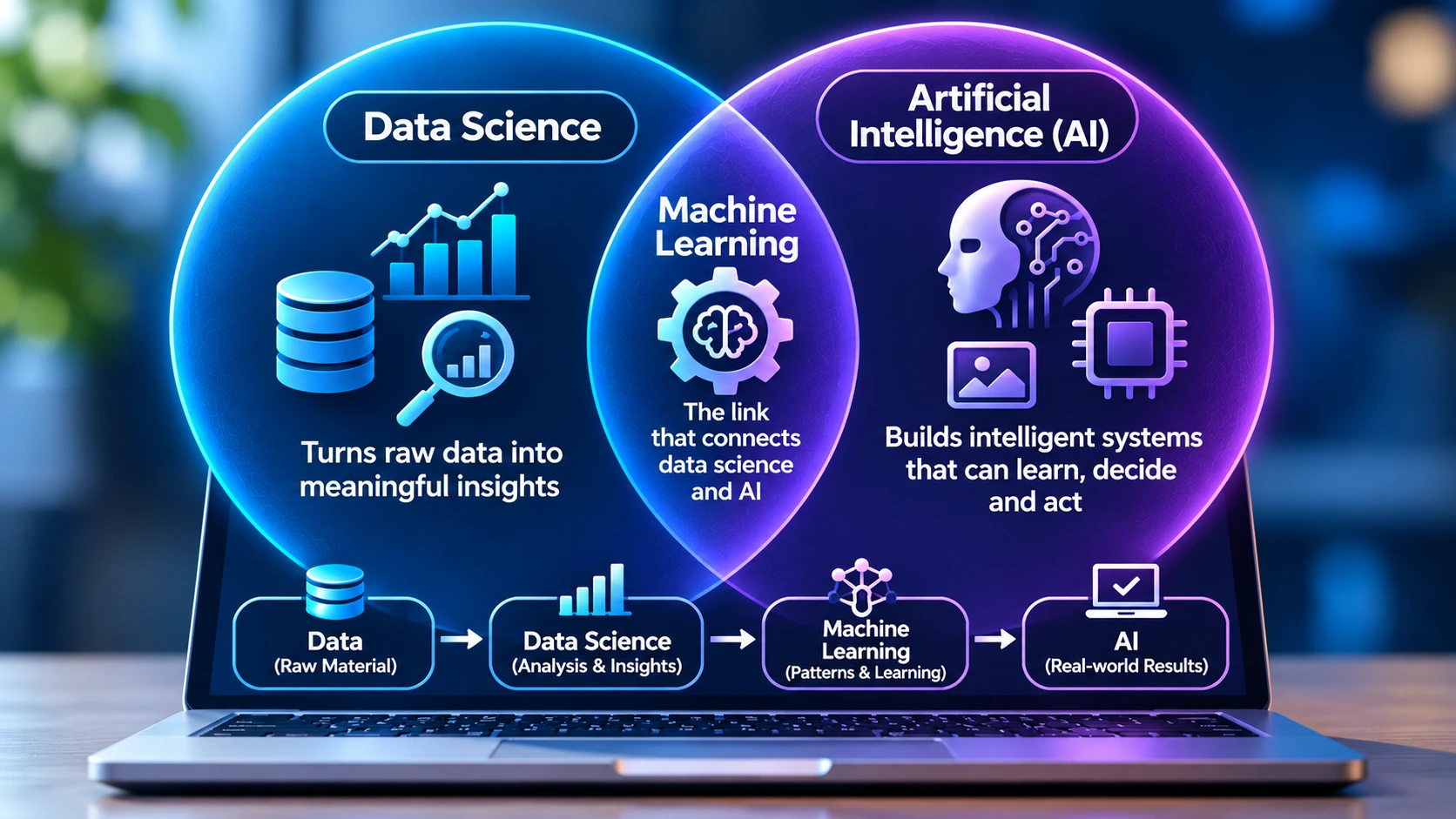
With all the discussions about “data science” and “artificial intelligence” on the Internet, people often assume that these two terms describe the same concept. However, they represent different fields, and we can understand their relationship through a few practical examples. Consider how Netflix predicts your interests or how a bank detects and blocks fraudulent transactions when unusual activity occurs on your card. These processes may seem like magic, but they rely on advanced technologies rather than magic.
What Is Data Science?
Data science is one of the ways to process large amounts of data in order to make something useful out of them. Nowadays, there is just too much information: clicks on a website, using an application, buying things, interacting through social networks. The task of a data scientist is to interpret it all and give the right answers to certain questions: what do clients need, which items might be profitable, why do people cancel subscriptions?
The process is achieved via a combination of skills in statistical analysis, programming and visualization, where Python, SQL, Pandas and Scikit-learn are among the most popular tools.
What Is Artificial Intelligence (AI)?
The definition of artificial intelligence is wider since it covers the development of machines capable of performing actions that are associated with human-like intelligence. It includes such actions as processing of natural language, images, patterns and even creating something new. Voice assistants, facial recognition tools, chatbots, and other similar AI-driven solutions are common examples of AI at work.
Where Data Science and Artificial intelligence Intersect
We can state this interaction in simple terms – data is the raw material, data science polishes it and then AI applies the results into action.
Take an online shopping site as an example. This site keeps track of all the searches of its customers, their purchases, browsing activity and many more. Data scientists use different techniques to analyze the data collected and detect some patterns in this data. For instance, they can detect that all the people buying running shoes also buy some socks. Machine learning systems learn all this and detect preferences of customers. AI technology then uses all the information to offer relevant products to the customers.
This whole interaction takes place as follows – data is the base, data science polishes it, machine learning detects patterns in it and AI gives useful results to the user.
Machine Learning: The Link Between Data Science and Artificial Intelligence
How exactly do data science and artificial intelligence interact with each other? The answer is through machine learning. It acts as a bridge between the two technologies. Rather than having the programmers code every single rule, machine learning algorithms learn by example.
For instance, take the example of spam filtering; mail systems are trained using hundreds of samples of spam and non-spam mails, eventually learning how to differentiate between them.
As Machine Learning continues to evolve, its role in Data Science is expanding beyond pattern recognition and prediction. Advanced AI technologies are making data analysis more intelligent, automated, and efficient. These developments are shaping the future of Data Science, from traditional Machine Learning approaches to AI-powered solutions.
Why Data Quality Is Important in Artificial Intelligence
However, here comes the tricky part: an AI system is as strong as the data that it gets. Poor-quality data creates poor AI systems. This is precisely why data science is such an important area — it is through working with data, its proper preparation, feature selection, model testing, etc. that an AI system is made good or bad.
Why Data Science and Artificial Intelligence Matter for Your Career
If you want to become a professional in the field of technology in general, having basic data science knowledge (Python, SQL, statistics, data visualization) can be the best way to move forward in the future and explore deep learning, computer vision, or any other area of artificial intelligence.
Conclusion
In summary, data science and artificial intelligence are two distinct areas that depend on each other. The former is responsible for getting insight out of raw data, the latter is about building intelligent capabilities while machine learning is somewhere in-between these two spheres.