

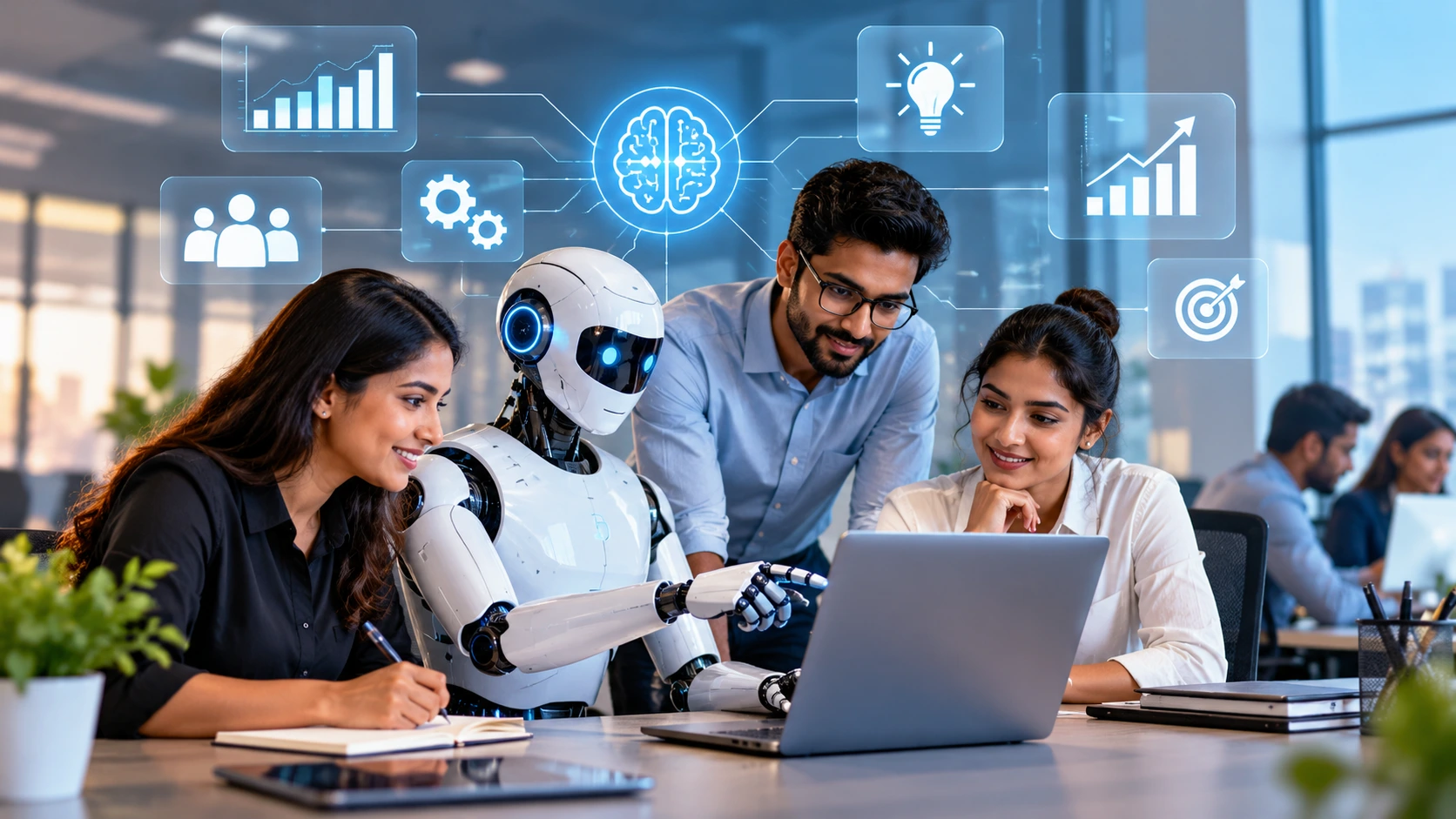
The integration of AI technologies in the current workplace is evident. Whether it is through automation of tasks or assistance in decision-making, the technology has revolutionized the workplace. Companies in various sectors are using AI to increase efficiency, save money, create improved customer experience, and open up possibilities. Although there are numerous benefits, the technology presents challenges that employees have to know.
Definition of Artificial Intelligence
Artificial Intelligence refers to technology that makes computers and machines capable of performing activities that usually need human intellect. Activities such as learning, problem-solving, language understanding, image recognition, data analysis, and decision-making are some of those performed by AI machines. Some of the examples of the AI tools are chatbots, virtual assistants, recommendation systems, generative AI tools, and data analysis systems powered by AI.
Automation of Repetitive Tasks
One of the key areas where AI in the Workplace is making a significant impact is automation. Numerous employees spend a lot of their time performing repetitive tasks such as data entry, report generation, meeting scheduling, answering questions, and document processing.
Many of these tasks can be automated using AI. For instance, AI tools can organize large amounts of data, summarize reports, and answer frequently asked customer questions. As a result, employees have more time to focus on important activities that require creativity, communication, and critical thinking.
Increasing Productivity
AI may assist employees in completing their tasks quicker and in a better way. The technology may be helpful in producing emails, presentations, analyzing data, generating ideas, and summarizing long texts.
For example, if an employee is supposed to analyze a large volume of data, AI may come in handy and generate some conclusions. This means they will not have to spend much time performing a simple analysis and can instead concentrate on interpretation and decision-making.
AI is not a replacement for an employee in this case but rather an assistant.
Improved Decision Making
A vast amount of data is being generated each day by businesses. Without proper technology, it becomes hard to interpret this data. AI can interpret large datasets to identify patterns, trends, and associations that may not be easily noticeable by humans.
For instance, through analysis of customer purchasing history, AI can help a retail firm identify future product needs. These predictions can help the managers make decisions in regards to inventory management, marketing, and sales.
Decisions made based on such recommendations need to be checked by humans, especially those with high monetary and social impacts.
Customer Service Changes
AI has revolutionized customer service in many companies. Nowadays, AI technologies are being used to help businesses respond to their customer inquiries using chatbots and virtual assistants.
With such technologies, companies are able to provide 24/7 customer support and solve frequently asked queries without the involvement of any human agent. However, in cases where customers face emotional challenges, special assistance by a human is required.
Creating New Jobs
Although some jobs may be automated by AI, there is an emergence of new job roles which will require employees with special qualifications. Companies require workers who can design, manage, control, and implement AI systems.
Some of these new jobs are AI engineer, machine learning engineer, data scientist, AI trainer, AI product manager, and AI ethics specialist. Some traditional jobs are also going to change because employees will learn how to use AI technologies at their workplaces.
Therefore, in the future workplace people and AI will collaborate rather than compete.
The Importance of New Skills
With the increased presence of AI, workers must learn new skills. Technical skills like data analysis, programming, machine learning, and using AI tools will be in demand.
However, human skills like creativity, critical thinking, communication, teamwork, leadership, and problem solving are hard to automate.
Employees who learn new technologies will benefit from continuous learning throughout their careers.
Issues Associated with AI in the Work Environment
While there are various advantages of AI, there are also associated issues. First, there is the issue of job loss. Certain tasks and positions might get automated due to the nature of certain occupations.
Another issue is the matter of privacy, security, and biases. Organizations using AI need to be responsible, and rules should be set for safeguarding the personal data of employees and customers.
Moreover, workers need to be aware that the information provided by AI can be wrong. The information generated should always be validated before it can be used in decision-making.
Data privacy is another important concern when adopting AI technologies. Data Privacy vs Artificial Intelligence: Is It Possible? explores the balance between AI innovation and data privacy.
The Future Work Environment
In the future, AI in the Workplace will enable human intelligence and artificial intelligence to work together. While AI can perform repetitive tasks, analyze information, and recommend actions, humans will continue to contribute unique qualities such as creativity, empathy, judgment, and strategic thinking.