

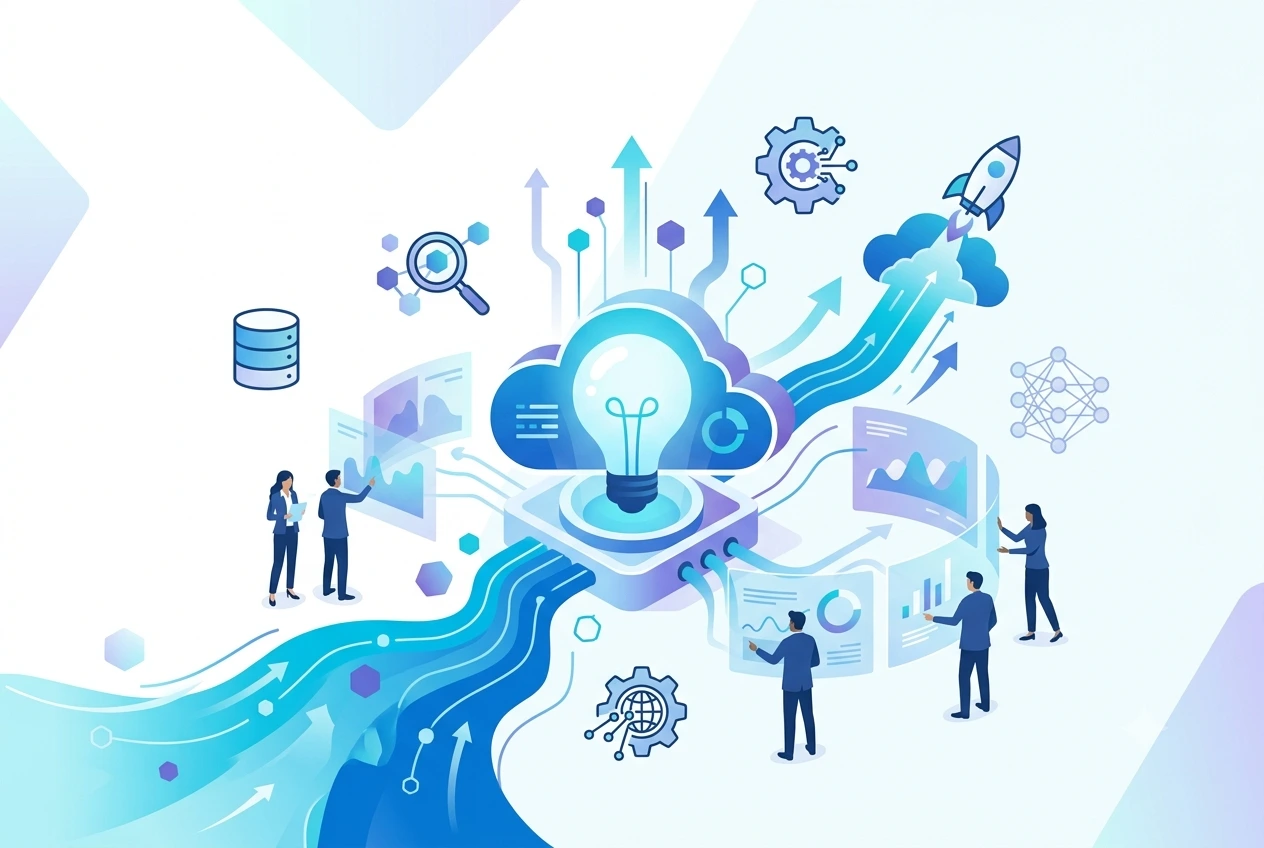
The amount of data created worldwide is increasing at an unprecedented rate. All online transactions, social networking activities, mobile applications, IoT devices, and business transactions create some useful data. It has become increasingly important to process and analyse this massive volume of data to stay ahead of the competition. Here is where Big Data technologies can play their part.
With technological development, the Big Data era is entering a new phase, becoming faster, smarter, and more widely available to everyone. Incorporating artificial intelligence, machine learning, cloud computing, and real-time analysis has taken the future of Big Data to a whole new level.
What is Big Data?
Big Data is a term used to refer to the huge and complex sets of data that cannot be handled by traditional methods of data processing. They are defined by the following five V’s:
Hadoop, Spark, NoSQL databases, cloud computing, among others, are some of the technologies applied in the handling of these data sets.
Emerging Trends in Big Data Technologies
1. Artificial Intelligence Integration
Integration of artificial intelligence has become key in big data analytics. Using AI algorithms, it becomes easy to analyze the huge data, identify any underlying trends, predict future developments, and make recommendations. Business organizations are increasingly depending on AI-powered analytics.
2. Real-Time Data Processing
Companies no longer want to wait for hours or even days for reports. With help from technologies such as Apache Spark Streaming and Apache Flink, businesses now have an opportunity to analyze their data immediately.
This is particularly useful in industries including finance, healthcare, cybersecurity, and e-commerce.
3. Cloud-Based Big Data Platforms
Nowadays, cloud computing has reshaped the approach to working with Big Data for companies. Organizations do not need to pay thousands of dollars for equipment since they can use platforms such as AWS, Microsoft Azure, and Google Cloud that offer storing and processing of data on the spot.
4. Data Lakes and Lakehouses
Data warehouses will soon be replaced by data lakes and lakehouses. Thanks to these new architectures, businesses can store both structured and unstructured data in one place, thus gaining an opportunity to conduct advanced analytics and machine learning.
5. Edge Computing
In connection with the increased number of IoT devices, companies cannot send all data to their cloud servers because it is impractical. The concept of edge computing makes it possible to conduct data processing close to its generation point.
Applications in Industries
Various industries are experiencing transformations owing to Big Data.
Challenges Ahead
Despite the benefits, there are some challenges that need to be addressed.
The organization needs to invest in technologies and employee training to handle these challenges.
Future Opportunities
Some technologies which would define the future of Big Data include:
All of these technologies will assist organizations in taking better decisions, improving their operations and providing better experience to their customers.
Big Data technologies are continuously evolving and changing the way organizations handle information. With the help of advanced AI, cloud computing, real-time analytics, edge computing, and intelligent automation technologies, Big Data has become increasingly powerful and usable in the recent years.
The organizations adopting these emerging technologies will get more insights from their data and will perform better in the data-driven world. As the data is continuously growing in volume and significance, the future of Big Data depends on converting raw data into actionable information.