

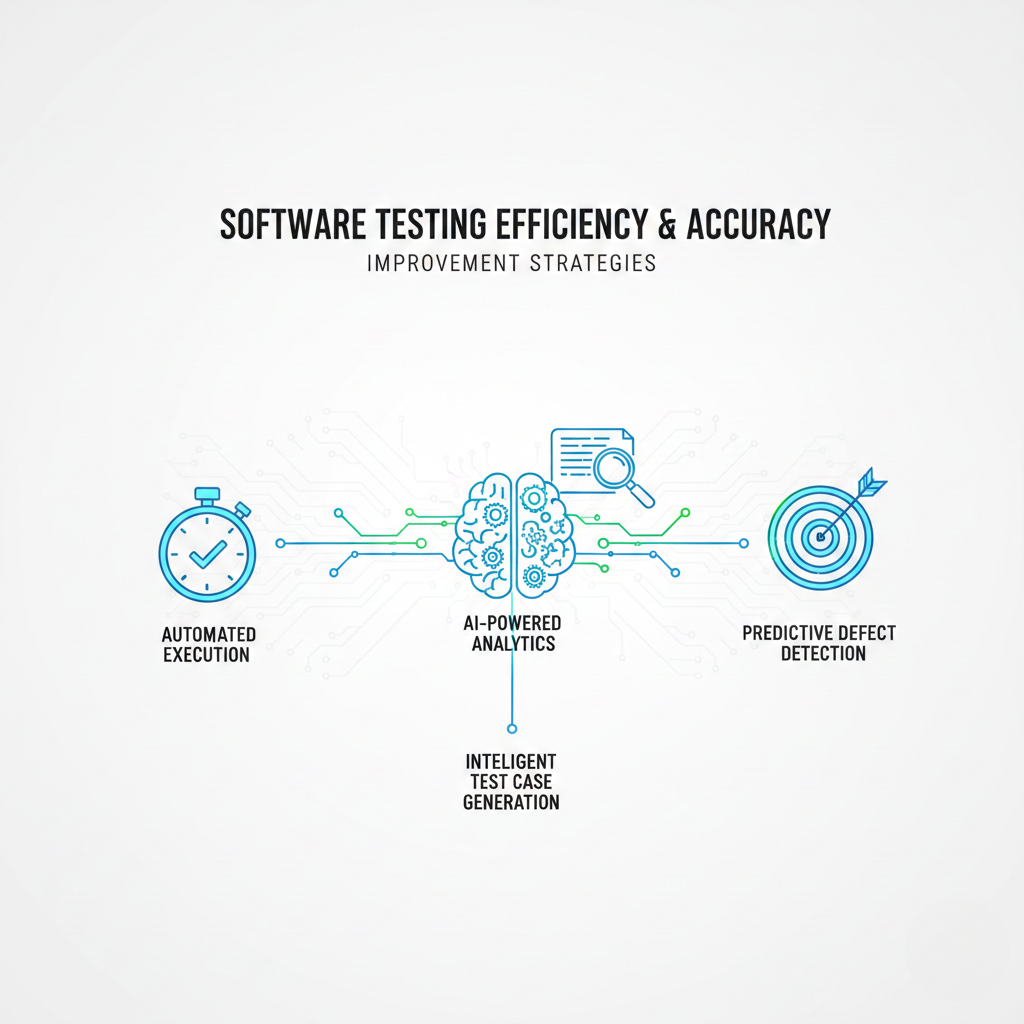

Efficient and accurate software testing is essential for delivering reliable, high-quality applications. As systems become more complex and deadlines get tighter, testing teams must focus on smarter methods rather than only increasing effort. Improving efficiency means executing tests faster with fewer resources, while accuracy means identifying real defects and reducing false results. When both are improved together, organizations can release better software with confidence.
Define Clear Testing Objectives
Testing becomes inefficient when goals are unclear. Before starting, teams should clearly define:
- what needs to be tested
- expected outcomes
- level of quality required
- acceptance criteria
Clear objectives prevent unnecessary testing and reduce rework. Requirement analysis is a key step understanding the product early helps testers design relevant test cases and avoid missing critical areas.
Improve Test Planning and Test Case Design
Well-structured test planning reduces confusion during execution. A strong test plan should include:
- scope of testing
- timelines
- testing tools and environments
- team responsibilities
Equally important is designing high-quality test cases. Good test cases should be:
- simple and clear
- based on requirements
- reusable
- traceable to features
Using techniques such as boundary value analysis, equivalence partitioning, and risk-based testing helps increase accuracy and coverage.
Automate Repetitive Test Cases
Manual testing is essential, but repeating the same tests wastes time. Automation improves both efficiency and consistency, especially for:
- regression testing
- repetitive scenarios
- arge data-driven tests
- cross-browser or cross-platform checks
Automation tools also reduce human error, improving accuracy. However, not everything should be automated—focus automation on stable, repetitive, high-value areas.
Maintain a Well-Organized Test Environment
An unstable or poorly configured testing environment leads to inaccurate results. Teams should ensure:
- updated builds
- correct versions of software and tools
- proper test data setup
- environment monitoring
Replicable environments, such as using containers or virtual machines, help testers reproduce issues more accurately and avoid confusion between environment errors and real defects.
Implement Continuous Testing
In modern development, especially Agile and DevOps, testing should not wait until the end of the cycle. Continuous testing integrates testing into every development stage. This leads to:
- faster defect detection
- reduced cost of fixing issues
- continuous feedback to developers
Testing early and frequently prevents major defects from reaching production and improves overall project efficiency.
Use Metrics and Test Reports Effectively
Improvement is impossible without measurement. Teams should regularly track:
- defect density
- test coverage
- pass/fail rates
- reopen rates
- automation success percentage
Meaningful reports help identify bottlenecks, evaluate quality trends, and make better decisions about release readiness.
Encourage Collaboration Between Testers and Developers
Testing accuracy improves greatly when testers and developers communicate closely. Collaboration helps:
- clarify requirements
- understand system behavior
- reproduce issues faster
- prevent misunderstandings
Participating in reviews, stand-ups, and walkthrough meetings builds shared ownership of product quality.
Invest in Tester Skill Development
Tools and processes matter, but skilled testers matter more. Regular training in:
- test design techniques
- automation tools
- domain knowledge
- debugging approaches
helps teams work faster and identify deeper issues. Skilled testers also think from the user’s perspective, improving test relevance and accuracy.
Conclusion
Improving software testing efficiency and accuracy is a continuous process. By defining clear goals, automating wisely, building strong test plans, maintaining stable environments, and focusing on collaboration and skills, organizations can deliver high-quality software faster. Effective testing is not just about finding bugs it is about ensuring reliability, performance, and a better user experience.
