

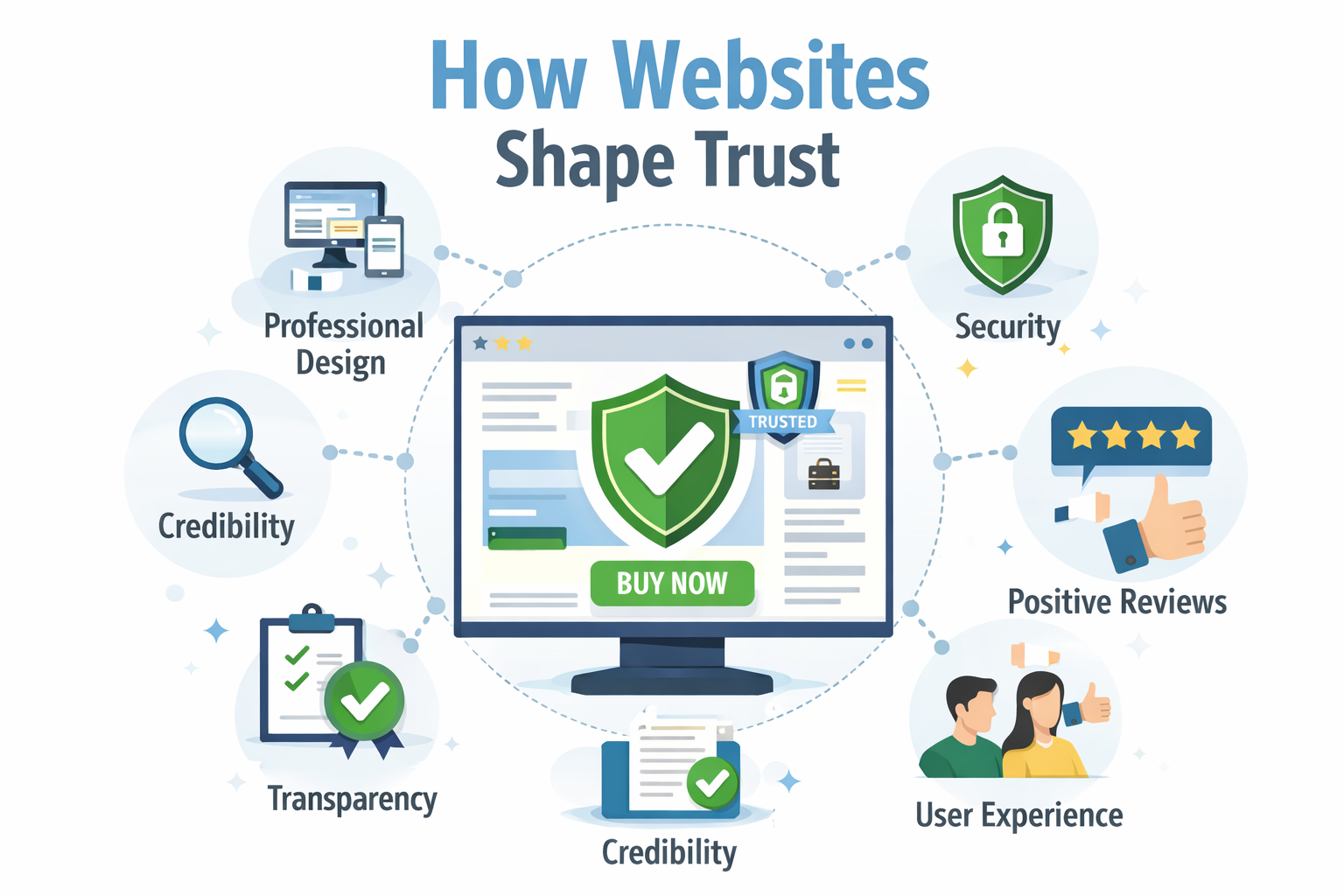

Your website is stepping stone of connection between business and potential customers. Within seconds, visitors form an impression about your brand based on design, clarity of information, and overall experience. A trustworthy website not only attracts users but also converts them into loyal customers. Businesses that invest in credibility-focused web design see higher engagement, more inquiries, and stronger brand reputation.
First Impressions Matter: Visual Design and Professional Branding
A clean, modern design with consistent branding immediately signals professionalism. Outdated layouts, broken links, or cluttered pages can make users doubt the legitimacy of your business. High quality visuals, readable fonts, adequate white space, and a clear layout help create confidence. Professional branding also includes consistent colors, tone of voice, and logo usage across all pages.
Transparency Builds Confidence
Visitors feel secure when they clearly understand who you are and what you offer. Trust grows when you display:
- Clear company information
- Contact details and office location
- About-us story
- Terms and privacy policy
Being transparent about pricing, policies, and services removes uncertainty and makes customers more comfortable engaging with your brand.
Social Proof: Let Your Customers Speak for You
People trust other people more than advertisements. Adding testimonials, reviews, client logos, and case studies helps prove that real customers have benefited from your services. Authentic reviews, preferably with names or company references, significantly improve credibility and reduce hesitation.
Secure Websites Protect Users and Reputation
Security is one of the strongest signals of trust. Websites with HTTPS, SSL certificates, and secure payment gateways reassure users that their data is safe. Security badges and compliance statements are especially important for businesses handling payments, forms, or personal data.
Content Quality Reflects Brand Authority
Trustworthy websites educate rather than just sell. High-quality content shows that your business understands the industry and genuinely wants to help customers. Blogs, guides, FAQs, and knowledge resources establish you as an expert. Content should be accurate, well-structured, and free from grammatical errors to maintain professionalism.
Consistency Across Digital Channels
Your website should align with your presence on social media, search engines, and business listings. Mismatched names, outdated phone numbers, or conflicting information can make users suspicious. Consistency reinforces authenticity and strengthens brand credibility.
Fast Loading Speed and Mobile-Friendly Experience
Users lose trust when a website is slow or difficult to navigate on smartphones. Fast loading pages, responsive design, and simple menus show that you respect visitors’ time. A smooth user experience directly increases conversion and trust.
Conclusion
Trust is not built through a single element it is the result of design quality, transparency, security, content credibility, and user experience working together. A trustworthy website becomes a powerful business asset that influences decisions, improves conversions, and strengthens your brand in the digital world.